Y
Yossi
"I love going to football games, but I've been burned by counterfeit tickets twice. I don't trust resale sites anymore."
Mobile · Trust & Verification · Case Study
Designing a safer second-hand ticket resale experience.
What if tickets were verified before they were ever sold?
TL;DR
A product design case study exploring how early verification, pricing transparency, and buyer protection can reduce anxiety in high-risk resale purchases.
User Pain
Buying second-hand tickets often requires making fast, high-stakes decisions with limited information. Through interviews and research, recurring frustrations emerged: fake or invalid tickets, last-minute price inflation, and unclear responsibility when purchases fail.
Beyond the financial loss, these failures carry a strong emotional cost - missed events, embarrassment at venue entry, and loss of trust in resale platforms.
Design Principles
Each principle directly addresses a pain point uncovered in research, and each one shows up in the interface.
Principle 01
Insight
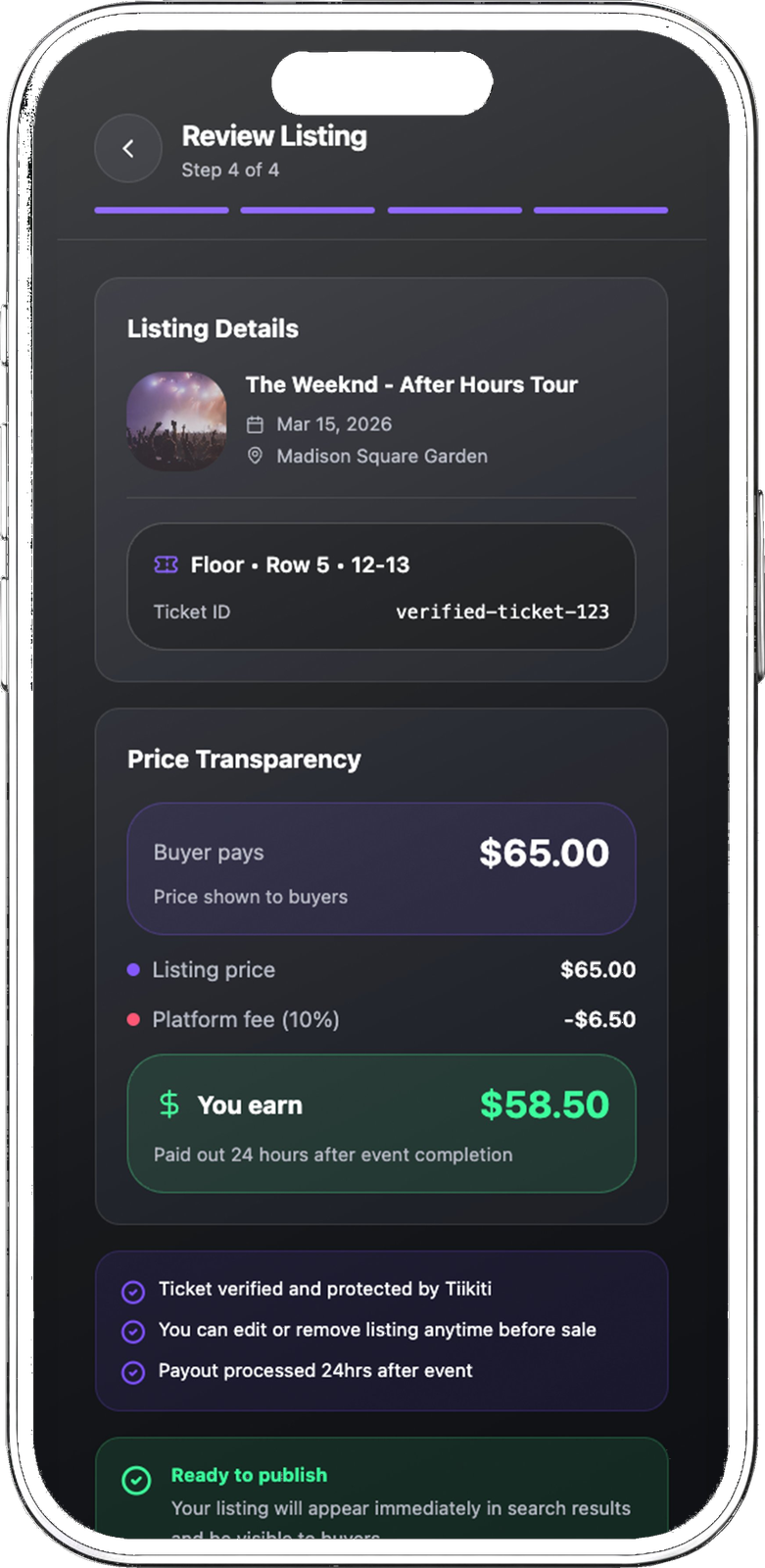
Pricing uncertainty creates pressure, not trust. Buyers often discover additional fees only at the final step of checkout, forcing them to make emotional decisions under time pressure.
Design Decision
We surfaced full price breakdowns before users commit - during discovery and listing - rather than at checkout.
Principle 02
Insight
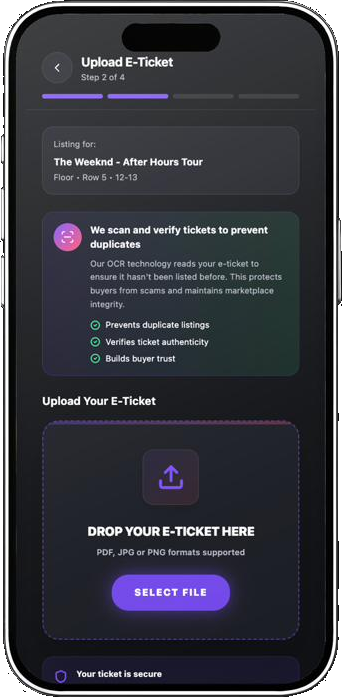
Fear of counterfeit tickets shifts risk to the buyer. Many users arrive at venues with tickets that appeared valid online, only to be rejected at entry - when it's already too late.
Design Decision
We required ticket verification before a listing can go live, rather than relying on post-purchase or venue-level checks. Verification states and validity indicators are visible throughout browsing and listing flows.
Principle 03
Insight
When platforms avoid accountability, trust collapses. In failed purchases, buyers are often left without clear responsibility or recourse, eroding trust in resale platforms.
Design Decision
We embedded buyer protection directly into the transaction flow, with visible safeguards, escrow, and dispute handling. Calm layouts replaced urgency-driven patterns.
Flow in Action
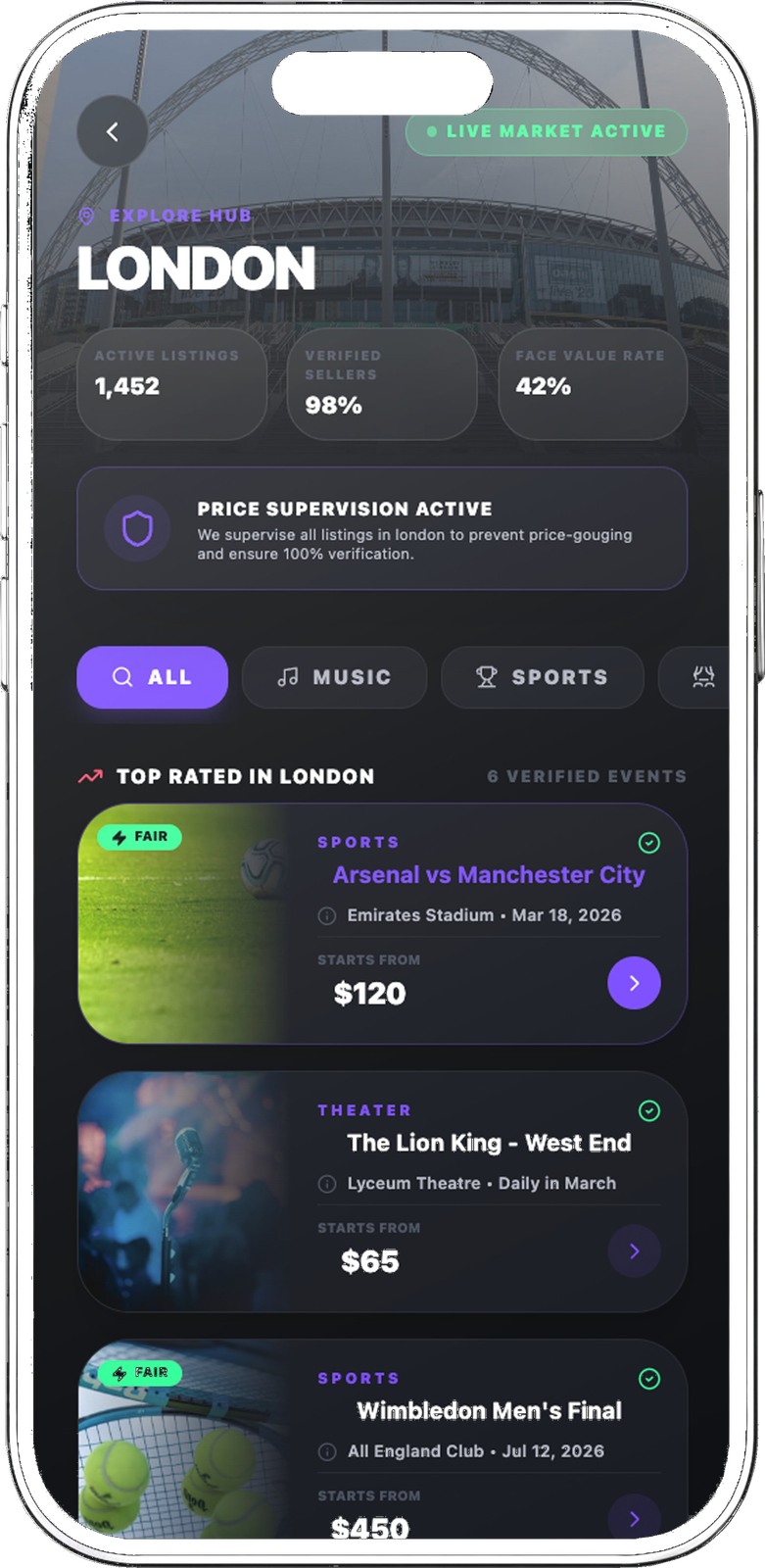
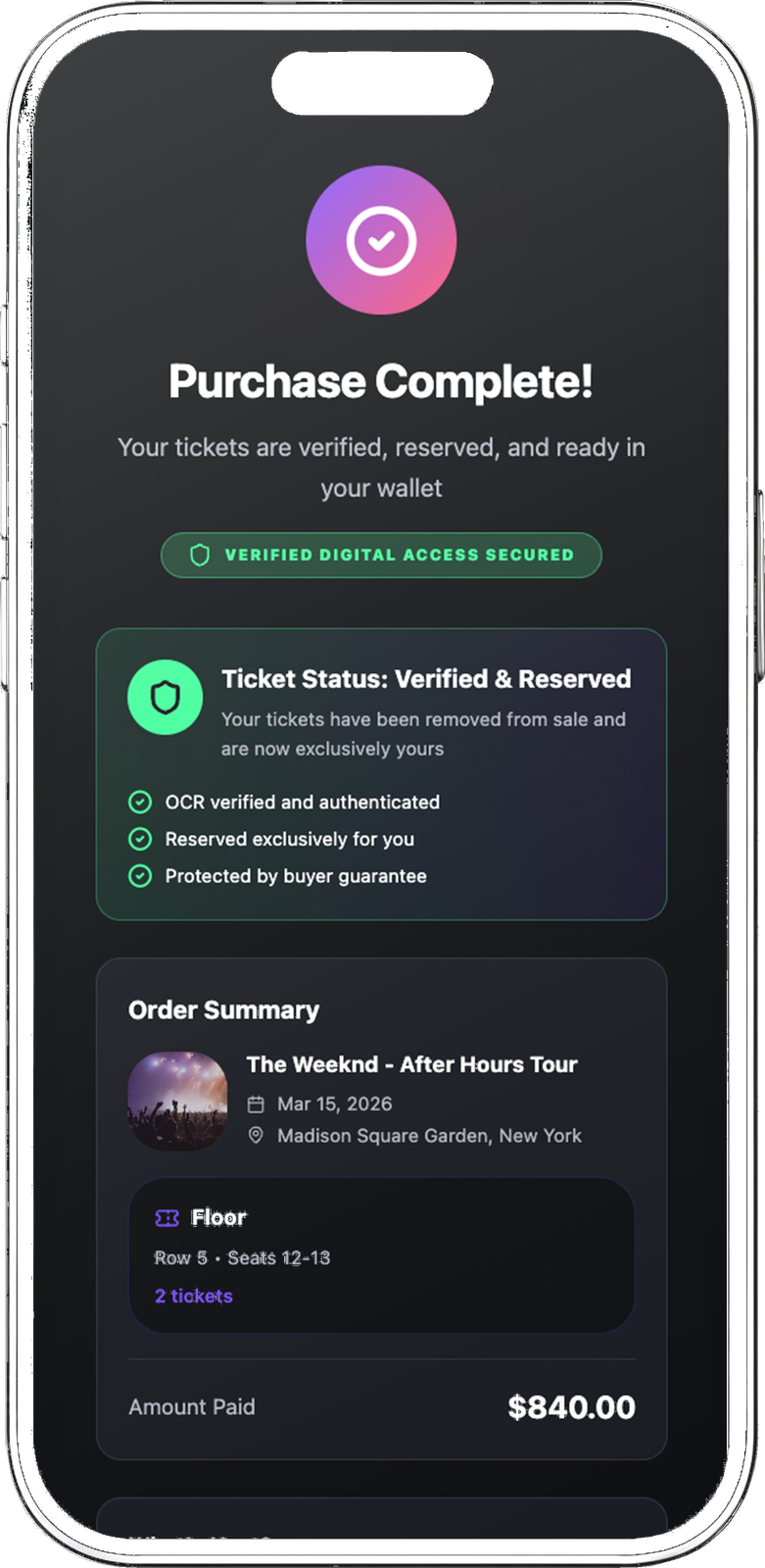
An overview of the core flows designed to reduce risk and emotional pressure throughout the resale journey.
Visual Language
A focused system built around trust signals, premium materials, and clarity. Every color, type choice, and component was made to support the buyer's decision.
01 - Color
A high-contrast palette built around three brand colors and a calm dark foundation, designed for legibility and emotional clarity.
02 - Typography
A single sans-serif handles everything from quiet labels to confident headlines. Weight and spacing do the heavy lifting.
03 - Signature Effects
Gradients and glow effects mark moments of confidence - verification, fair pricing, completed transactions.
04 - Components
Four core components that recur across the product, designed for clarity and confidence.
Used for browsing, favorites, and search results.
Gradient primary for commitments. Ghost for secondary actions.
Color-coded trust signals across browsing, listing, and checkout.
Used in the listing flow to guide sellers toward fair pricing.
Who We Designed For
Personas representing recurring behavioral patterns from research interviews.
"I love going to football games, but I've been burned by counterfeit tickets twice. I don't trust resale sites anymore."
"I wanted to surprise my partner with concert tickets, but by the time I found them, prices had doubled. I bought anyway, but it felt like I was being scammed."
"I tried to resell a ticket when I couldn't attend, but it took days to process, and I ended up losing money."
"When resold tickets cause entry problems, it damages our reputation too. We need a platform that works with event hosts, not against them."
Try It Yourself
Walk through the full TIIKITI prototype - browse listings, verify tickets, complete a purchase, and resell. Built as an interactive walkthrough.
Opens in a new tab · Best viewed on desktop
What This Case Study Demonstrates
TIIKITI demonstrates my approach to product design: starting from emotional pain, mapping it to system behavior, and designing interfaces that earn trust rather than demand it.
What's Still Open